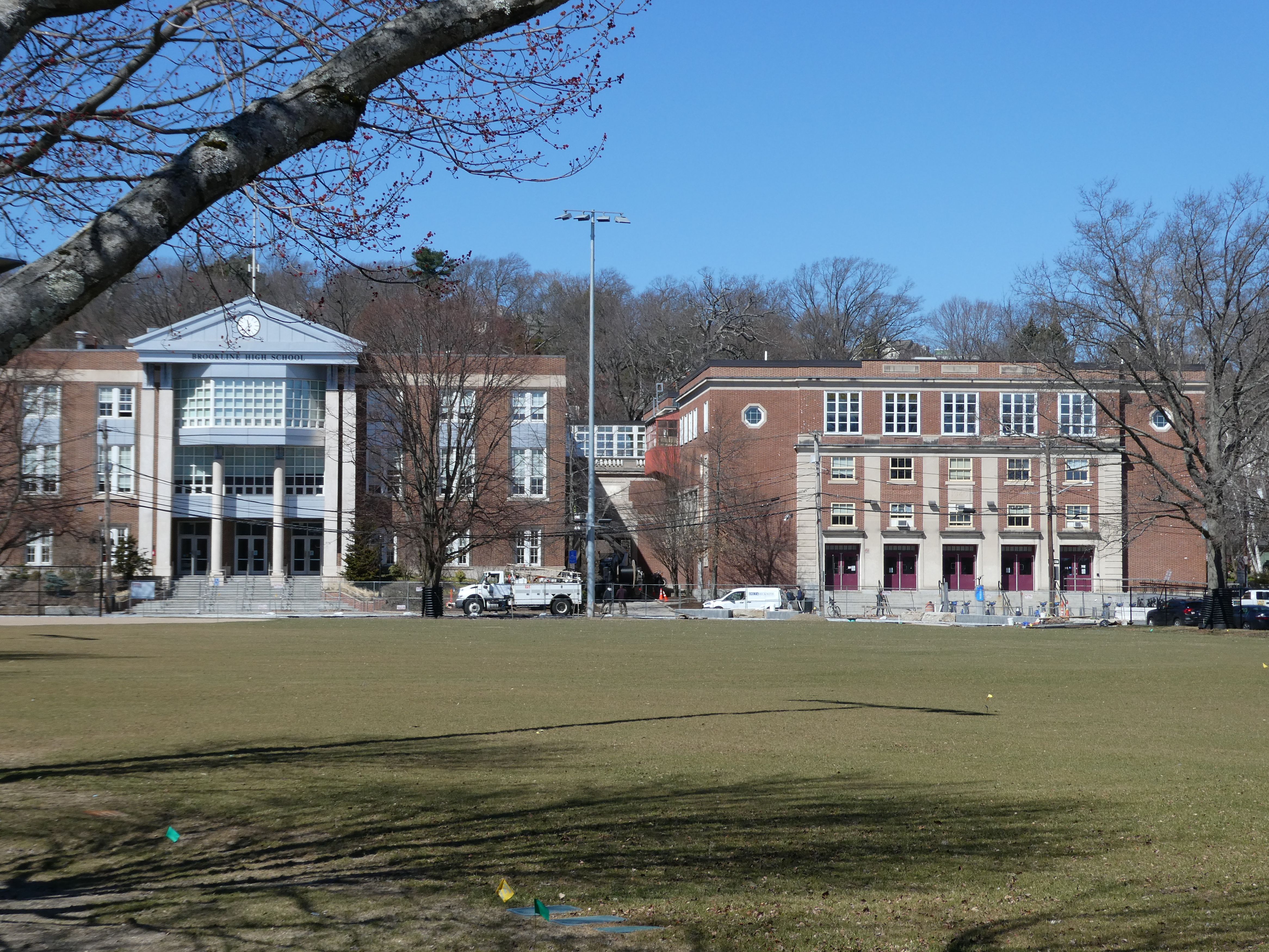
Brookline's 7,023 public school students have no district-wide policy governing artificial intelligence use in classrooms, even as Boston, Cambridge and Newton roll out formal guidelines.
WBUR reported Tuesday, Sept. 22, that the Public Schools of Brookline (PSB) was among three districts that either did not respond to public records requests about AI policies or asked for more time. Springfield and Milton were the other two.
Brookline High School senior William Koyfman told WBUR the result is a patchwork. "Some teachers who are anti-AI will reject it completely, and other teachers who are more pro-AI or more willing to experiment will assign you work to do with AI," he said.
A review of PSB's official policies page confirms the gap. The School Committee has voted on policies covering student civil rights, curriculum materials, career technical education and personal electronic devices in recent years. None address AI. The district's technology page lists an acceptable-use policy but nothing specific to generative AI tools.
The Massachusetts Department of Elementary and Secondary Education (DESE) released an AI guidance framework outlining principles for data privacy, transparency, bias awareness and academic integrity. It leaves specifics to individual districts.
Neighboring systems have moved ahead. Boston Public Schools blocks ChatGPT on school networks but has approved Google Gemini for teenage students. Boston also launched a teacher training program this year, backed by a million-dollar philanthropic donation, to build AI literacy at all grade levels, according to WBUR.
Cambridge Public Schools published generative AI guidance on Aug. 31, 2026, approving tools like SchoolAI for all students and Gemini for Cambridge Rindge and Latin School students. ChatGPT and Microsoft Copilot are not approved for student use in Cambridge.
Newton Superintendent Anna Nolin told WBUR that AI policy has been on Newton's agenda "for the third year in a row" because the technology changes so fast. Newton teachers use AI detectors to flag potential plagiarism.
The state has proposed requiring all high schoolers to demonstrate knowledge of responsible AI use before graduating. No timeline for that requirement has been set.
For BHS's roughly 2,181 students, the absence of a district policy means each classroom operates under its own rules. Koyfman said whether a student can use AI depends entirely on a teacher's individual permission.
Superintendent Bella Wong and School Committee Chair Bob Weintraub have not commented publicly on AI policy plans. No AI-related item appears on any upcoming School Committee agenda available as of Sept. 23.