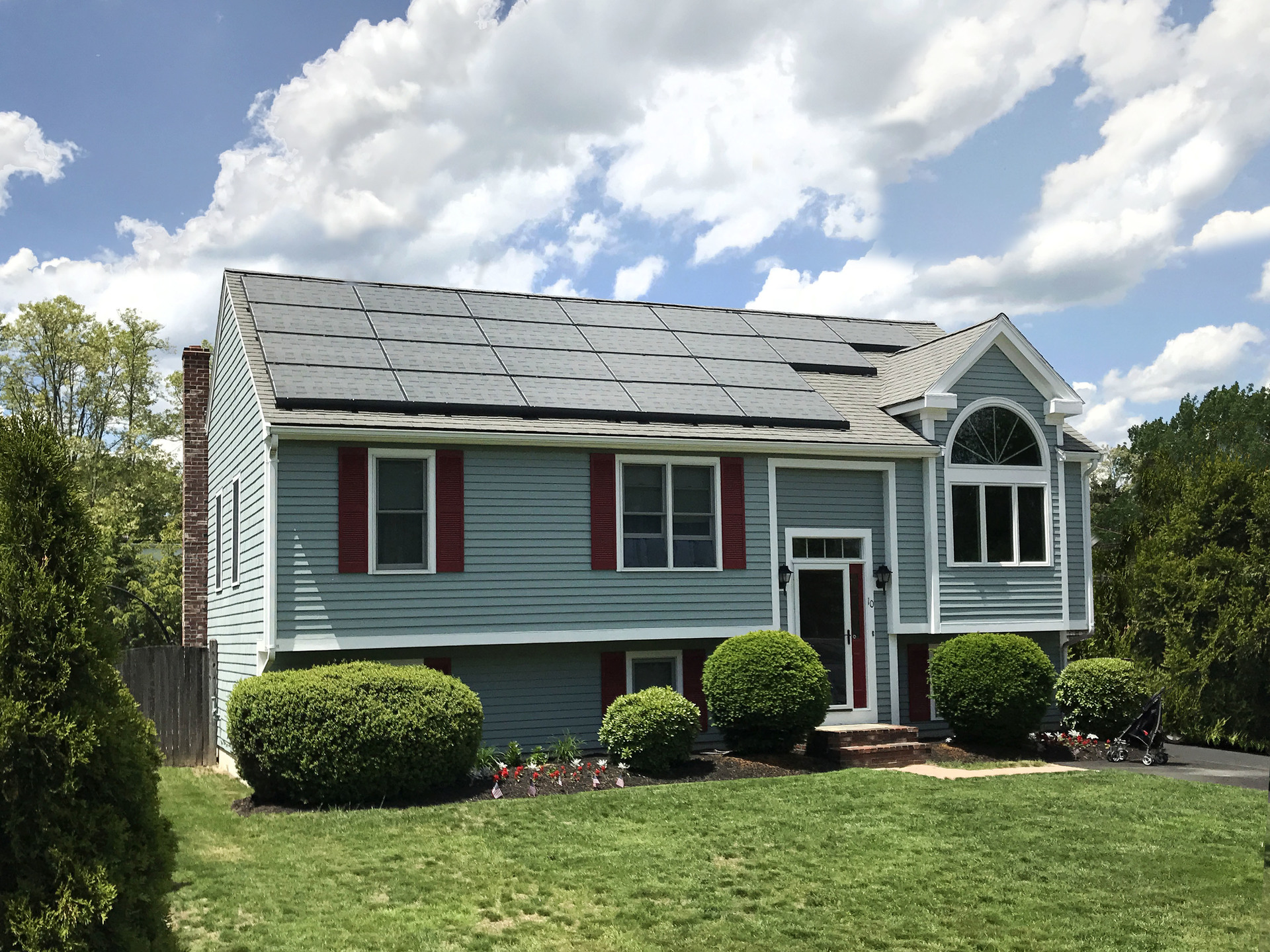
Brookline homeowners in local historic districts can now follow new rules for installing rooftop solar panels, electric vehicle chargers and heat pumps after the Preservation Commission released its first guidelines update in nine years.
The 2025 Local Historic District Design Guidelines, which supersede the 2016 version, weave sustainability requirements throughout the document for the first time. The revision adds entirely new sections on mechanical systems and lighting, with specific guidance on solar panel placement, EV charging station installation and HVAC equipment.
Elizabeth Armstrong, chair of the Preservation Commission, wrote in the document's introduction that commissioners must balance stewardship of historic homes with climate goals. The commission, she wrote, focuses on historic preservation "while working to align our decisions with the goals of the Town's climate action plan and state laws governing sustainability, housing supply, and affordable housing."
The guidelines tie directly to Brookline's Climate and Resilience Plan, known as CARP. The document frames building preservation itself as a carbon-reduction strategy, noting that reuse conserves the embodied carbon in existing structures.
What the new rules say
Solar panels must not obscure historic features visible from the street or significantly alter a building's profile. Homeowners need to submit scaled drawings showing panel locations, conduit routes and all exterior equipment. Exterior conduit must be painted to match the wall or roof surface and cannot run along a building's front face.
EV chargers should not go on the front of a building, though the commission may grant exceptions based on existing electrical infrastructure and driveway layout. Chargers cannot remove or irreparably damage historic materials.
For HVAC systems, condenser units belong at the rear of the property when practical. Units visible from the street may need screening with evergreen shrubs or historically appropriate fencing. Piping on visible elevations should be clustered together and painted to blend in.
Faster approvals for compliant projects
The commission built a shortcut into the new rules. Projects that follow the solar, EV and HVAC guidelines can qualify for a Certificate of Appropriateness through a "10-day letter" process, which notifies abutters by mail and grants approval if no objection arrives within 10 days. Projects that cannot meet the guidelines require a full public hearing.
Any exterior change visible from a public way, park or body of water still requires review by the commission or preservation planners. Vegetation and wooden fences do not count as obstructions when planners assess visibility.
The guidelines were originally approved in 2003 and revised in 2005, 2013 and 2016. The specific date of the 2025 approval has not been published.
Homeowners with questions can contact the preservation planners at Town Hall, 333 Washington St., at 617-730-2612 or 617-730-2617.