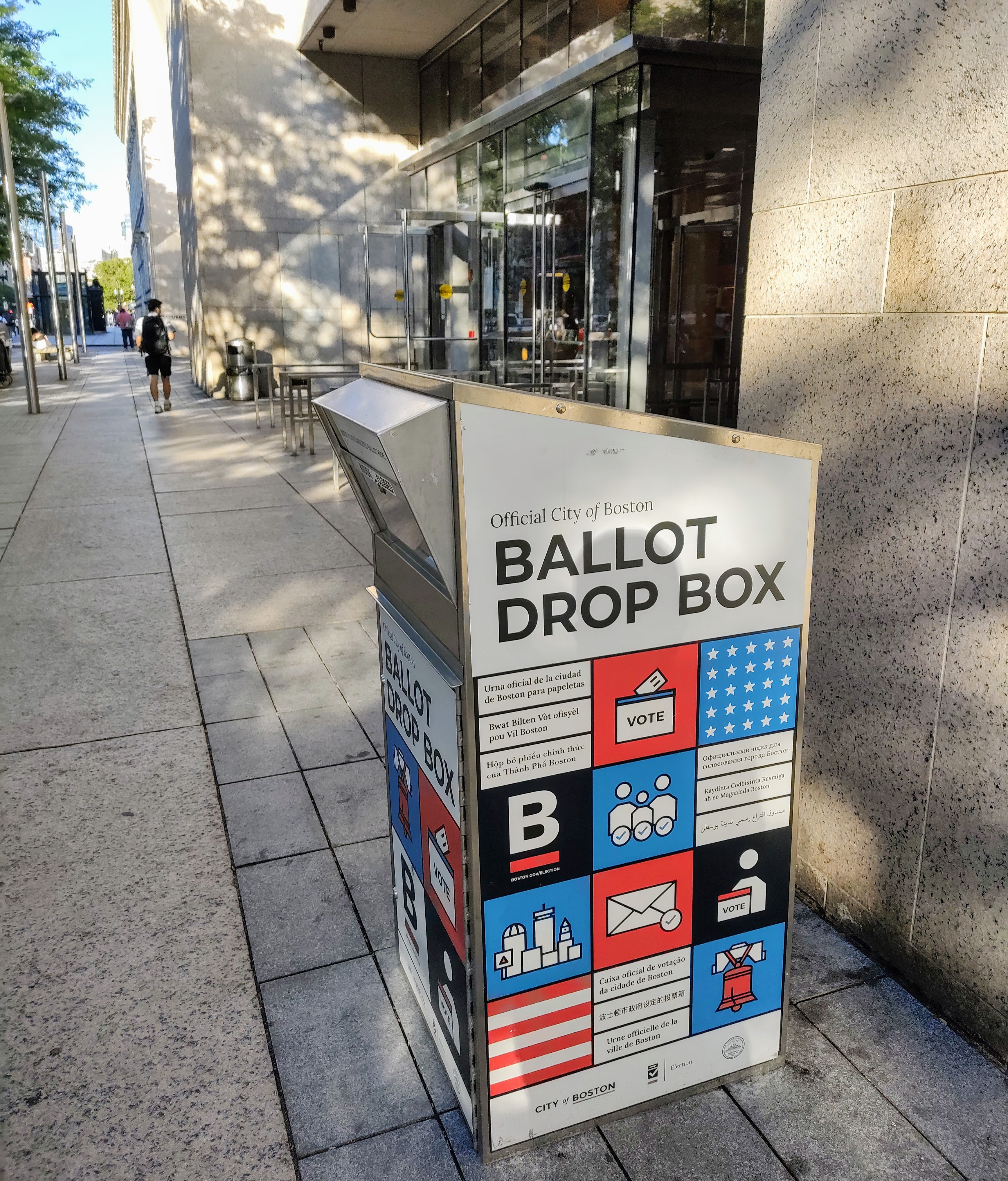
Brookline voters will decide Nov. 3 whether Massachusetts should scrap party-based primaries and advance the top two vote-getters to the general election regardless of party.
Question 3 would replace the current system, in which Democrats and Republicans hold separate primaries, with one ballot listing every candidate. The two who receive the most votes would face off in November. Governor's races would be an exception: voters would still pick a governor-lieutenant governor ticket.
The change, if approved, would take effect Jan. 1, 2028, and apply to state legislative, congressional, statewide and county races. It would not cover presidential or municipal elections, according to WBUR.
Backers point to a competitiveness problem. In the 2026 cycle, 60 percent of Massachusetts state House and Senate races have only one candidate on the November ballot. California, which adopted a top-two system, had just four uncontested Assembly races and zero uncontested state Senate races in a comparable cycle, according to the Independent Voter Network.
Danielle Allen, a Harvard professor who chairs the Coalition for Healthy Democracy and leads the Yes on 3 campaign, told Beacon Hill Roll Call that 61 percent of Massachusetts elections in 2024 had just one name on the ballot. "Under Question 3, every voter and every candidate takes part in the same primary, and the top two vote-getters advance to November," Allen said.
Former Republican Gov. Charlie Baker and former Democratic Gov. Deval Patrick both endorsed the measure Monday, Oct. 5. Baker said all-party primaries "will give voters more choice and our elected officials will have to reach across the aisle to voters from other parties if they want to be successful."
Both the Massachusetts Democratic Party and the Massachusetts Republican Party oppose Question 3. MassGOP chair Amy Carnevale called it a "misguided initiative" that would "undermine core democratic principles." MassDems chair Steve Kerrigan said the system "would give more power to wealthy donors and corporate PACs," according to CommonWealth Beacon.
Jordan Berg Powers, chair of Voter Rights MA, argued that unenrolled voters are not shut out under the current system because they can already choose either party's ballot without joining a party. Nearly 65 percent of registered Massachusetts voters are unenrolled, according to the Secretary of the Commonwealth's office.
Polling shows a tight race. A MassINC Polling Group survey conducted Sept. 14–22 for CommonWealth Beacon found 43 percent of likely voters planning to vote yes, 36 percent no and roughly 20 percent undecided. A University of New Hampshire poll from the same period found 41 percent yes and 39 percent no. Among independents not counting party leaners, 51 percent backed the measure and 23 percent opposed it, according to the MassINC poll.
MassINC president Steve Koczela said both parties marching together against the measure is "something that should keep the campaign proponents up at night." He noted that undecided voters on complicated ballot questions often default to the status quo.
The measure would also introduce fusion voting, displaying which parties have endorsed each candidate on the ballot. It would grant political party status to any group whose candidates received at least 3 percent of ballots in the prior state primary.
Tufts University's Center for State Policy Analysis found "limited evidence" that top-two primaries in California and Washington "may modestly reduce polarization and slightly increase primary election turnout," though the approach "also seems to attract more money into political races."
Early voting runs Oct. 17 through Oct. 30. The voter registration deadline is Oct. 24, and the vote-by-mail application deadline is Oct. 27.