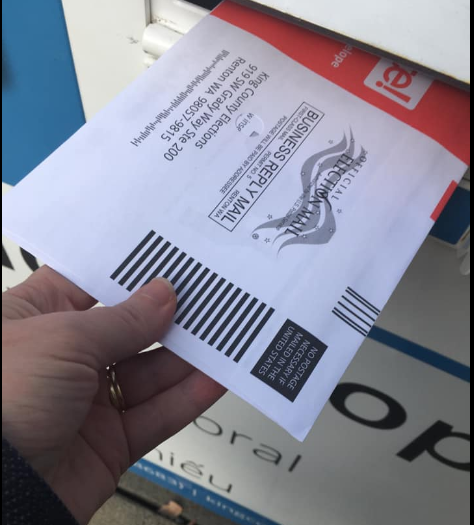
A federal appeals court ruled Sept. 10 that the Postal Service cannot enforce a new rule controlling mail-in ballot procedures before the Nov. 3 election.
The ruling matters in Brookline, where Town Clerk Ben Kaufman told GBH News in August that about 50% of voters cast their ballots by mail. Only 5 to 10% vote in person during early voting, Kaufman said.
The three-judge First Circuit panel, consisting of U.S. Circuit Judges Gustavo Gelpí, Julie Rikelman and Seth Aframe, upheld a preliminary injunction issued Sept. 4 by U.S. District Judge Indira Talwani in Boston. The injunction bars the USPS from implementing a rule, published Aug. 21, that would have required election officials to affix Postal Service barcodes to mail-in ballot envelopes. Officials also would have had to upload voter data to a USPS portal and submit voter rolls to the agency.
The rule would have required election officials to personally deliver all outbound mail ballots to a USPS facility and remain on-site during a barcode verification process. The USPS portal was not yet operational when the rule took effect, according to Courthouse News.
The First Circuit found the rule likely violates the Elections Clause of the Constitution. That clause assigns regulation of congressional elections to states and Congress, not to an executive agency acting without congressional authorization. The panel also found no record evidence of past fraud or a likelihood of fraud related to the November election, according to the ruling as reported by Universal Hub.
The injunction protects the 24 jurisdictions that sued: 23 states, including Massachusetts, plus the District of Columbia. States that did not join the lawsuit may still implement the USPS system. Several Republican-led states joined the case as intervenors supporting the Trump administration.
The litigation, consolidated from League of Women Voters of Massachusetts v. Trump and a related suit brought by 23 states and the District of Columbia, began after a March 31 executive order directed the Postal Service to refuse delivery of mail-in ballots from voters not on a federally created enrollment list, according to the ACLU. Judge Talwani wrote in her Sept. 4 order that the rule's requirements would impose an extraordinary workload on local officials who are already administering elections.
The League of Women Voters and co-plaintiffs said in a joint statement that the Postal Service does not have authority to serve as gatekeeper for mail ballots.
The fight is not over.
The Trump administration has asked the U.S. Supreme Court to stay Talwani's injunction, according to SCOTUSblog. A ruling from the court has not been announced. Massachusetts sends every registered voter a mail-in ballot application before each election.